
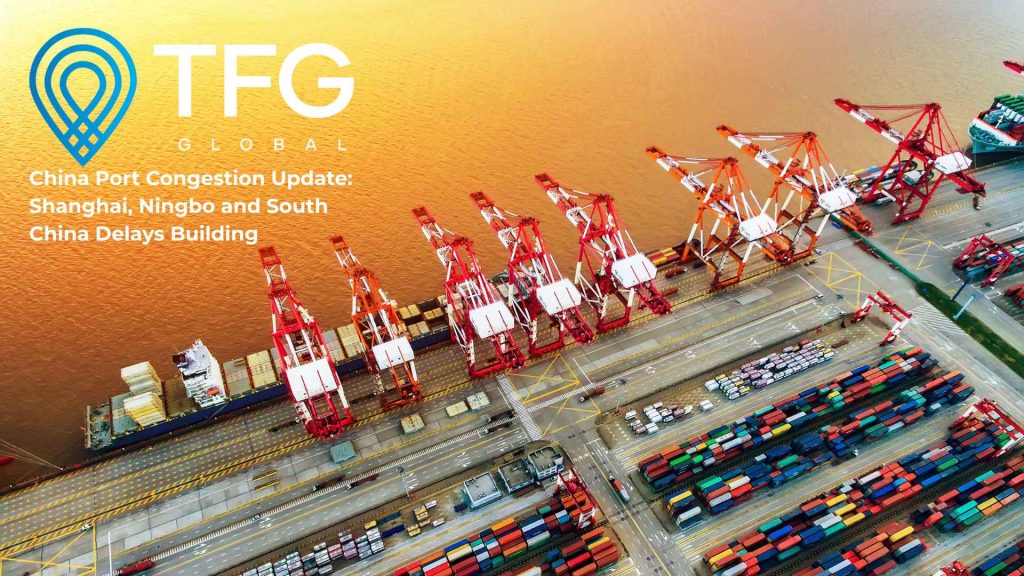
China’s major export ports are facing renewed congestion pressure following recent typhoon disruption, heavy vessel backlogs and overloaded terminal infrastructure.
The most significant impacts are being seen across Shanghai and Ningbo, with flow-on pressure now building across South China ports as vessels are delayed, rerouted or rolled across multiple services.
For Australian importers, this is a situation to watch closely.
Even where cargo is not directly affected by a port closure, the wider network impact can still create delays through late departures, missed connections, port omissions, container rollovers and changing vessel schedules.
What Is Causing the Current China Port Congestion?
The current disruption is being driven by several overlapping issues.
Recent typhoon activity interrupted terminal operations across key export regions, particularly in East China, with carrier updates confirming that Typhoon Bavi caused port closures and extended waiting times around Shanghai and Ningbo.. As terminals work through vessel backlogs, the recovery is being slowed by high yard utilisation, heavy gate-in volumes, carrier overbooking and ongoing container rollovers.
At the same time, earlier ocean freight rate increases and concerns around capacity have contributed to more urgent cargo movement, with shippers pushing freight into already congested terminals.
The result is a difficult cycle across parts of the network:
- Vessels waiting for berths
- Cargo waiting to be packed or stuffed
- Containers waiting for yard space
- Carriers rolling cargo to later sailings
- Terminals managing high equipment and yard pressure
- Schedules becoming less reliable across multiple trade lanes
This is not isolated to one port.
Delays at major export hubs can quickly affect downstream services, including Australia-bound cargo.
Shanghai and Ningbo Remain Key Pressure Points
Shanghai and Ningbo are currently among the worst affected areas.
Terminal suspensions and weather-related disruption have created vessel backlogs across East China, and recovery is taking longer than expected.
Shanghai is facing severe congestion, with delays affecting both Waigaoqiao and Yangshan operations. Yangshan-bound cargo is particularly exposed to yard pressure and grounding risk, with operational disruption expected to continue while terminals work through the backlog.
Ningbo is also under heavy pressure, with elevated yard occupancy and vessel waiting times affecting the broader port complex.
For importers using Shanghai or Ningbo as origin ports, this may result in:
- Later vessel departures
- Missed cut-offs
- Rolled containers
- Longer terminal dwell time
- Increased risk of port omissions
- Less reliable estimated arrival dates into Australia
Importers should confirm current booking status and vessel schedules before relying on previously advised ETDs.
South China Ports Also Under Pressure
The impact is now extending into South China, with Hapag-Lloyd reporting South China waiting times and accumulated typhoon-related delays.
Yantian, Shekou and Nansha are also experiencing congestion pressure as vessels and cargo flows shift from other Chinese ports. Rerouted vessels from Shanghai, Ningbo, Qingdao and Tianjin are adding further strain to terminal operations.
While average waiting times may be lower than Shanghai and Ningbo, the concern is the direction of movement.
As more vessels arrive in succession, terminal pressure can build quickly.
This matters for Australian importers because South China is a major export region for manufactured goods, consumer products, industrial components, machinery and retail cargo.
Delays through Yantian, Shekou or Nansha can affect both direct sailings and transhipment connections into Australia.
What This Means for Australian Importers
Australian importers should expect more schedule volatility from China over the short term.
The most likely impacts are:
- Delayed departures from Chinese origin ports
- Rolled bookings where services are overfull
- Increased risk of missed transhipment connections
- Vessel schedule changes or port omissions
- Longer lead times from supplier readiness to vessel departure
- Greater uncertainty around arrival dates into Australia
This does not mean every shipment will be delayed.
But it does mean importers should avoid relying on tight sailing windows, especially where cargo is time-sensitive or linked to customer delivery commitments.
What Importers Should Do Now
Importers with cargo moving from China should take a more active approach over the coming weeks.
Recommended steps include:
- Check the latest status of bookings from Shanghai, Ningbo, Yantian, Shekou and Nansha.
- Confirm whether cargo has actually gated in and loaded, not just been booked.
- Allow extra lead time for vessel departure and transhipment.
- Avoid promising customers delivery dates based only on original ETDs.
- Speak with suppliers about packing and gate-in timing.
- Monitor whether carriers are rolling cargo to later sailings.
- Consider alternative origin ports only where it genuinely improves reliability.
- Keep freight partners updated on critical shipments.
The key is communication.
In a congested market, the earlier a delay is identified, the more options there are to manage it.
TFG Global Recommendation
China port congestion is currently creating added uncertainty for Australian importers.
Shanghai and Ningbo remain the main pressure points, while South China ports are also becoming more exposed as rerouted vessels and cargo flows add strain to terminals.
If you have cargo moving from China, now is the time to check booking status, confirm vessel schedules and build extra time into your delivery planning.
TFG Global is monitoring the situation closely and will continue working with customers, carriers and overseas partners to manage delays, review routing options and keep cargo moving where possible.
If you have time-sensitive cargo moving from China, speak with the TFG Global team before making delivery commitments.
—
When it comes to freight forwarding, we are the full package. Market-leading service, values, and solutions.
For all your freight-forwarding solutions, internationally and Australia-wide, you need TFG Global.
Phone: 1300 (693 734) MY FREIGHT | +61 3 9090 7546
Email: andrew@tfgglobal.com.au
Web: www.tfgglobal.com.au
Disclaimer
TFG Global makes reasonable efforts to ensure the information contained in this publication is accurate and current at the time of writing. However, freight markets, carrier operations, regulatory requirements, and supply chain conditions are subject to change and may vary by shipment, trade lane, carrier, port, or service.
This publication may include information sourced from third parties, industry reports, carrier updates, and publicly available data. While TFG Global considers these sources to be reliable, it does not warrant the accuracy, completeness, or timeliness of such information, nor does it endorse any third-party views or opinions.
The information provided is general in nature and does not constitute legal, financial, customs, or logistics advice. Nothing in this publication is intended to exclude, restrict, or modify any rights or remedies available under Australian Consumer Law.
To the extent permitted by law, TFG Global disclaims liability for any loss, damage, cost, or expense arising from reliance on this information, whether direct or indirect. Readers should seek advice specific to their circumstances before making freight or supply chain decisions.