
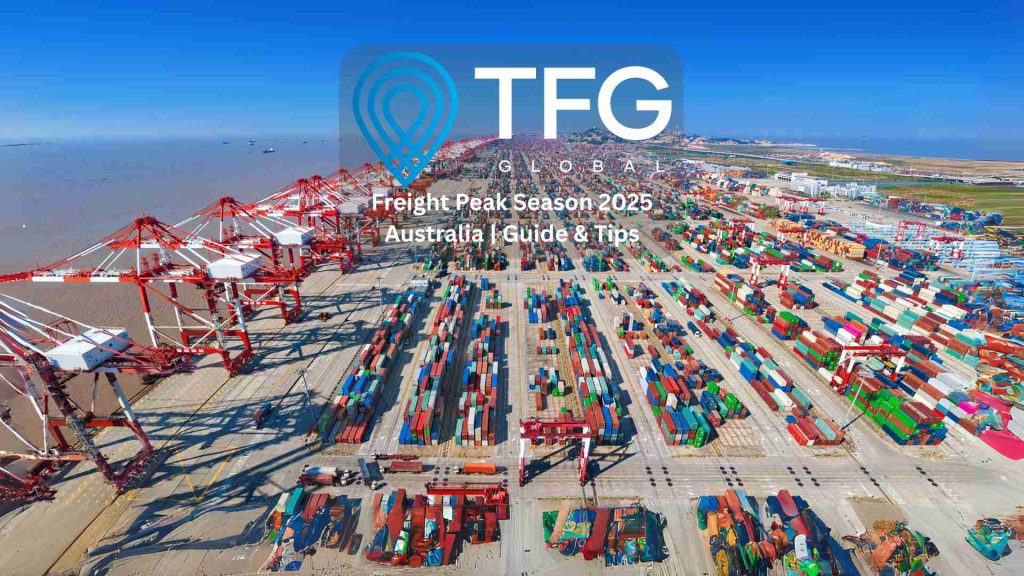
Introduction: Peak Season’s Here, and It’s Busy
Freight Peak Season 2025 Australia is underway, and the pressure is real. Vessels are filling fast, GRIs and PSS are nudging rates higher, equipment availability is tight in key Chinese ports, and weather is adding noise to already busy schedules. For supply chain teams across APAC, the next few months are a balancing act: secure reliable transit without blowing the budget, protect on-time delivery without overpaying for speed, and keep inventory moving while ports and carriers run hot. This guide blends the sharp market signals of late September with practical tactics for October through December so you can keep cargo moving and margins stable.
Market Overview: September to December 2025
Peak season kicked off with a crunch. Space tightened quickly, utilisation climbed, and bookings often closed before cut-off. General Rate Increases in September set a higher baseline, typically USD 300–600 per TEU on core APAC lanes. At the same time, NOR (non-operating reefer) shortages in major Chinese gateways created extra friction for equipment planning.
What to expect through December:
- Rates: September GRIs have reset the floor. Additional PSS and tactical increases are likely around Golden Week and late-October replenishment.
- Capacity: Direct services from China and Southeast Asia to Australia remain tight. Early bookings are essential to avoid rolled shipments.
- Equipment: NOR and standard 40s are under pressure in South China. Inland repositioning windows are narrow.
- Congestion and Weather: Sydney and Melbourne continue to feel strain at times. Cyclone season can disrupt northern corridors.
- Airfreight: E-commerce, perishables, and time-critical cargo keep air demand elevated as a release valve when sea lanes stretch.
China to Australia: Late-September Signals You Should Act On
The September pattern was classic peak season: a soft opening, a mid-month push, a small pullback, then a sharp upturn into month-end as space vanished. In South China hubs, boxes were rolled not once but sometimes twice, which pulled spot rates higher even before October.
What this means for your plan:
- Treat China–Australia as a premium lane for the next 6–10 weeks.
- Mix services: use a premium weekly where schedule matters, and budget carriers for cost-in buffer freight.
- Expect cut-and-run port calls and last-minute rotation changes that can add days. Build buffers.
The Big Three Drivers of This Peak Season
- Australia’s steady demand: Immigration, household consumption pockets, and resilient mining and agri exports keep volumes flowing.
- China–Australia ties running warm: Fuller bilateral pipelines from EVs to infrastructure components lift volumes.
- Hard calendar deadlines: September to October is the last window for Christmas inventory to make shelves. Miss it and the season is lost.
Pricing and Capacity Snapshot
- Core GRIs: Many carriers published USD 300–600 per TEU in September. Some airlines adjusted air surcharges on key lanes to match demand.
- Service split: Premium services are holding firm on price and schedule. Budget services are flexing pricing to fill space.
- Equipment: Ongoing NOR tightness at Chinese ports. Standard equipment is also tight around South China and Taiwan during pinch weeks.
Peak Season Challenges (and How to Counter Them)
Capacity constraints
- Problem: Overbooked vessels and aircraft, rolled containers, longer waits for equipment.
- Counter: Book 3–4 weeks ahead, draw on multi-carrier options, and stagger ETDs to reduce single-sailing risk.
Higher freight rates
- Problem: GRIs, PSS, fuel surcharges, and premium fees compress margins.
- Counter: Blend contract and spot, secure rate caps where possible, and use slow/fast lane pairing to manage average cost per CBM.
Port congestion
- Problem: Berth delays, slow landside productivity, extended dwell.
- Counter: Consider alternate terminals and ports, pre-clear customs, and enable off-peak delivery where viable.
Customs delays
- Problem: Volume spikes increase processing times. Errors trigger holds.
- Counter: Tight documentation discipline, pre-lodge where available, and leverage broker-managed compliance for tricky HS codes.
Labour and warehousing
- Problem: Staff scarcity and full sheds slow throughput.
- Counter: Line up overflow 3PL capacity now, implement WMS visibility, and schedule inbound arrival smoothing with suppliers.
Airfreight: The Safety Valve, Not a Magic Wand
Air volumes typically rise into November on e-commerce pushes and perishables. Add in tariff-driven frontloading and you get higher load factors on key APAC lanes.
Practical approach:
- Pre-book uplift for SKUs with hard launch dates.
- Use sea-air or air for partials to protect retail launches.
- Keep unit economics honest: air is insurance, not strategy.
Service Reliability: How to Manage Rolling, Blanks, and Rotation Swaps
- Rolling risk: Expect even gated-in boxes to roll during pinch periods. Mitigation: duplicate bookings across consecutive sailings for mission-critical cargo.
- Blank sailings: CAT, Wallaby, CA2, and similar services announce tactical blanks and delays of 4–13 days. Mitigation: visibility tools and contingency routings through alternate hubs.
- Rotation changes: Carriers may omit or reorder ports to recover schedules. Mitigation: lead-time buffers of 5–10 days for Q4 arrivals.
Seasonality 101 (Applied to 2025)
Peak season patterns still hold:
- Global: August to October for Black Friday and Christmas, January–February pre-CNY.
- Australia & Oceania: May to August early builds, September to November peak for imports, December to March softer but with restocks.
Why it matters: miss the window and you risk stockouts, lost sales, and expensive air rescue. Planning still beats heroics.
The Importer’s Playbook
- Plan and book early: Lock capacity weeks ahead. Negotiate contracted space or mini-bids where your volumes justify it.
- Diversify your options: Pair premium and economy ocean services. Use multi-carrier strategies and consider air-sea blends for time-sensitive lines.
- Visibility and forecasting: Lean on real-time tracking and demand forecasts to re-sequence orders before delays bite. Share rolling 8–12 week forecasts with your forwarder.
- Customs readiness: Pre-clear where possible, double-check HS codes, values, and certificates to avoid holds.
- Warehousing and labour: Stand up overflow warehousing and temp labour. Use WMS and ASN discipline to smooth receiving.
- Build buffers: Communicate realistic ETAs and pad delivery commitments to protect service levels.
Practical Tactics You Can Use This Week
- Tier your SKUs: A-items get premium space and faster routings, B/C items sail economy or go on later windows.
- Hold a shadow booking one week after your primary for launch-critical products.
- Pre-approve alternates: ports, carriers, and service strings to pivot quickly.
- Requote quarterly: the market is moving. Lock in sensible ceilings, not fantasies.
- Use carton-level visibility so sales and operations stay aligned on inbound.
- Audit detention and demurrage monthly. Small tweaks to free time save big in peak.
FAQ: Quick Answers for Busy Teams
Why do rates spike during peak season? Demand outruns capacity. Carriers apply GRIs and PSS, and premium space commands a premium price.
How early should we book? Aim for 3–4 weeks ahead for China to Australia shipments from now to December.
Is airfreight worth it? For high-value or hard deadline products, yes. Use it selectively to complement seafreight.
What about weather and congestion? Add buffer days, consider alternate routings, and keep close contact with your forwarder for live re-sequencing.
How do we manage cost volatility? Blend contract and spot, monitor advisories, and negotiate rate protection windows where possible.
A Quick Checklist for Peak Season 2025
- Forecast SKUs and volumes through January, share with your forwarder
- Lock space 3–4 weeks ahead, tier services by SKU priority
- Confirm equipment type and pickup windows with origin depots
- Pre-lodge customs and verify documents early, includes paperwork related to BMSB seasonal measures for 2025–26.
- Stand up overflow warehousing and labour if needed
- Build 5–10 days of buffer into late-Q4 deliveries
- Track dwell, D&D, and OTIF weekly to stay ahead of exceptions
Conclusion: Play Offense, Not Defense
Freight Peak Season 2025 Australia rewards shippers who get ahead of the crunch. The ingredients are familiar, but execution matters. Book early, diversify carriers and routes, protect key SKUs with premium space, and keep documentation spotless. With a clear plan, you can protect service, control costs, and avoid last-minute firefighting as the calendar barrels toward Christmas.
—
When it comes to freight forwarding, we are the full package. Market-leading service, values, and solutions.
For all your freight-forwarding solutions, internationally and Australia-wide, you need TFG Global.
Phone: 1300 (693 734) MY FREIGHT | +61 3 9090 7546
Email: andrew@tfgglobal.com.au
Web: www.tfgglobal.com.au